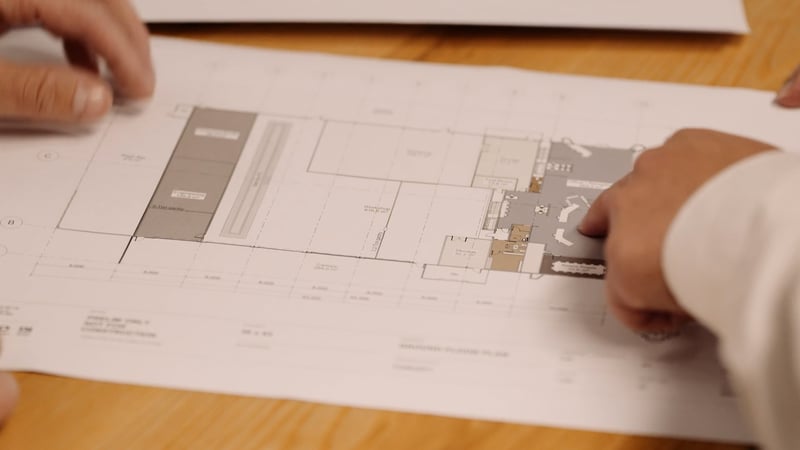
The architect is engaged directly. The engineers have their own contracts. Consents are managed separately. Construction is divided between structural, civil, services and fit-out contractors.
Each package is competitively priced. The developer retains control. There is no head contractor margin across the full project.
On paper, the numbers can look compelling.
The problem is that the project still needs someone to coordinate the design, manage the interfaces, control the programme and take responsibility when one scope meets another.
Removing the head contractor does not remove this work. It transfers it to the developer.
That is where many of the expected savings begin to disappear.
Design risk starts before construction
Commercial project risk is often discussed as a construction issue. In practice, many of the most expensive problems begin during design.
When an architect, structural engineer and building services engineer are engaged separately, each has a defined scope and professional responsibility.
Their work also needs to come together as one coordinated design.
That does not happen automatically.
Someone must check that the structural drawings align with the architectural design, that the services can pass through the structure, that penetrations are correctly located and that the proposed construction methodology works with the documentation.
When these matters are resolved during design, the cost is usually limited.
When they are discovered during construction, they can lead to redesign, variations, delays and work being completed twice.
Separate consultant appointments also create more work for the developer. Every appointment requires its own briefing, negotiation, review process, approvals and contract administration.
There is also the question of who retains responsibility for the design once construction begins.
If the consultants remain directly engaged by the developer, the contractor may only be responsible for building what is shown. The developer can remain caught between the designer and contractor when an issue arises.
The gaps between contracts
The most expensive issue on a fragmented project is often not poor work. It is the gap between two otherwise valid scopes.
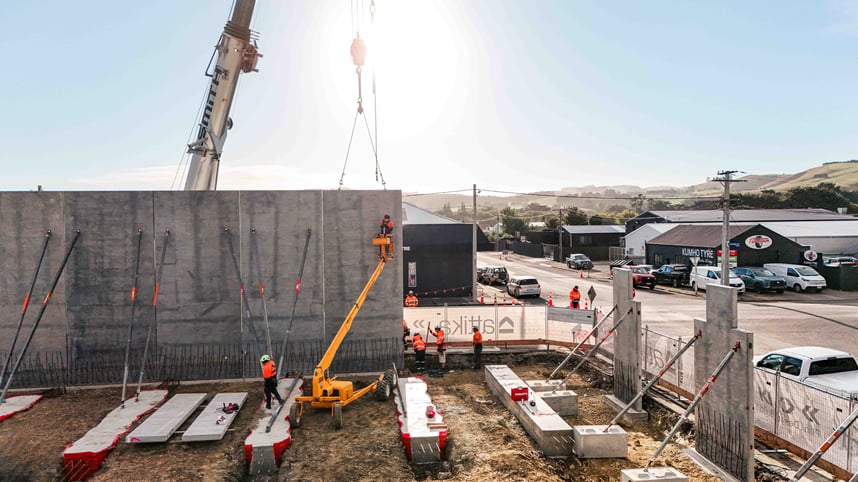
The structural contractor completes their package. The fitout contractor arrives and finds that a level is wrong, a penetration is missing or a service clashes with the structure.
Both contractors may have followed their documentation.
Neither may be responsible for resolving what sits between them.
Under a single head contractor, these interfaces are managed within the construction team. The sequencing, coordination and cost consequences are dealt with through one line of responsibility.
Under separate direct contracts, the developer becomes part of the dispute.
They must establish what happened, determine who is responsible, negotiate the cost and keep the wider programme moving.
The interface existed from the beginning. It only became visible when work reached the site.

Health and safety becomes more complex
Engaging several contractors directly can also change the developer’s role in managing health and safety.
Under the Health and Safety at Work Act, businesses working on the same site can have overlapping duties. They are required to consult, cooperate and coordinate their activities where those duties overlap.
With a head contractor, the site will generally operate under one health and safety system. There is a central induction process, shared site rules and a clearly identified party coordinating activities across the workplace.
When several contractors are engaged directly, the structure is more complicated.
Each contractor must understand the work being completed around them, the hazards being introduced and how their activities affect other people on site.
The developer may also hold duties based on the influence or control they have over the work.
This does not mean every developer becomes responsible for every contractor’s actions. It does mean the contracting structure needs to be understood and actively managed.
Discovering those obligations after work has started is too late.
A low tender may still contain gaps
A commercial tender should be assessed on more than its total price.
A detailed scope can contain hundreds of individual requirements. Site establishment, temporary works, services coordination, specialist performance requirements, access, protection, testing and work by others can all materially affect the final cost.
Some items are excluded clearly.
Others are covered by assumptions that may not align with the rest of the project.
A quantity surveyor or experienced contractor will unpack the tender and test what has actually been allowed for. They will compare the price against the drawings, specifications and wider project requirements.
That review is particularly important when construction has been divided into separate packages.
Each contractor prices its own scope. Unless someone reviews the project as a whole, work can be duplicated, omitted or assumed to sit within another package.
The project can appear to be within budget while several necessary items remain unpriced.
Once work begins, those missing items become variations.
Contractor relationships affect delivery
Programme performance is also influenced by commercial relationships.
Subcontractors who work regularly with a head contractor have established systems, shared expectations and an ongoing relationship to maintain. Both parties understand how information is exchanged, how problems are escalated and what standard of performance is expected.
A developer engaging the same subcontractor for a single project does not have that history.
That does not mean the subcontractor will perform poorly. It means the developer may have less influence when labour and resources are under pressure.
This often appears as gradual programme drift rather than one major failure.
One contractor arrives late. Another cannot start because the preceding package is incomplete. A third reallocates its team while waiting.
Each delay appears manageable on its own. Together, they can affect the entire completion date.
The developer’s time has a cost
Directly managing several consultants and contractors requires significant time.
Someone must:
- coordinate the design team
- manage consent information
- review tenders and exclusions
- confirm sequencing between contractors
- chair site meetings
- track decisions and documentation
- resolve disputes between scopes
- monitor the programme
- manage health and safety coordination
- assess variations and payment claims
For an experienced developer with an internal project team, this may be entirely manageable.
For a business owner attempting to deliver a project alongside their normal role, it can become a substantial operational burden.
Delays in making decisions can also create direct project costs. Contractors may be unable to proceed, materials may need to be reordered and programme dates can move.
A head contractor’s margin includes the people, systems, relationships and experience required to manage this work.
Removing the margin does not remove the function.
Where the expected saving goes
When fragmented projects exceed their original budgets, the additional cost can usually be traced back to a series of small decisions and unowned risks.
A design issue resolved on site.
A missing item that was not identified during tender review.
A delay between two contractor packages.
Additional health and safety coordination.
Professional advice needed to resolve a scope dispute.
The developer’s own time spent managing issues that would otherwise have been handled within one project team.
Most of these costs were absent from the original tender comparison. They still appear in the final account.
Projects that perform well are usually structured around clear accountability. Every scope, interface and decision has an identified owner.
For some projects, that can be achieved through separate consultant and contractor appointments. It requires an experienced developer, strong project management, coordinated documentation and clearly defined responsibilities.
For more complex commercial projects, a single party responsible for design and construction can materially reduce the risk sitting between contracts.
Choosing the right delivery structure
There is no single delivery model that suits every project.
A fragmented approach can work where the scope is straightforward, the design is well coordinated and the developer has the capability to manage the project directly.
The risk increases when the project involves multiple consultants, specialist services, staged construction or several contractors working within the same programme.
The important question is not which structure produces the lowest initial price.
It is who will own the whole project, including the parts that sit between individual scopes.
If the answer is unclear, the risk is probably sitting with the developer.
Attika helps commercial and industrial clients understand these risks before they reach site.
To discuss the right delivery structure for your project, contact our team.